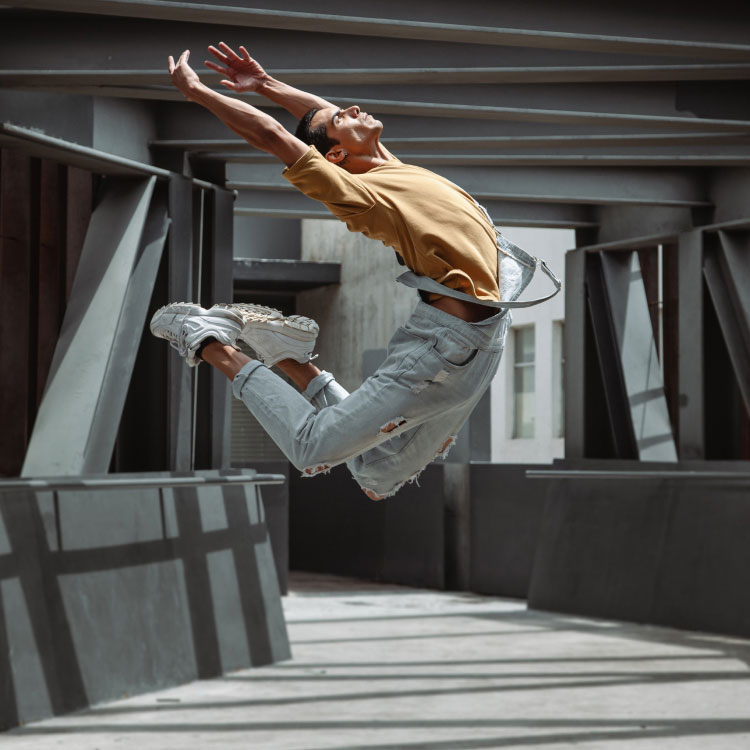
Many people judge a dance floor by whether it feels slippery or hard. While both matter, they do not tell the whole story.
A safe dance floor must effectively manage impact forces without creating excessive softness or instability. Just as important is uniformity. Dancers rely on their bodies’ ability to anticipate how the floor will respond, and inconsistent performance can increase physical stress and injury risk.
Vibration control is equally important. Excessive vibration transfers energy back into the body, increasing muscular workload and fatigue. Because fatigue often precedes injury, high-performance floors should dissipate vibration efficiently and help conserve energy throughout rehearsal and performance.
A safe floor effectively manages force, maintains uniform performance, controls vibration, and supports the biomechanics of human movement.
Learn More: What Makes a Dance Floor Safe?